Collapsible water bags are essential for outdoor adventures, emergency preparedness, humanitarian relief, and portable hydration in industrial or military use. Their material composition plays a decisive role in durability, flexibility, safety, weight, and overall performance. The three most common materials—TPU (Thermoplastic Polyurethane), PVC (Polyvinyl Chloride), and LDPE (Low-Density Polyethylene)—each bring distinct advantages and trade-offs.
This article explores the characteristics of TPU, PVC, and LDPE in collapsible water bag applications, covering mechanical performance, safety, environmental impact, and best-fit scenarios.
Why Material Matters in Collapsible Water Bags
Unlike rigid bottles or jerry cans, collapsible bags must maintain a delicate balance:
- Flexibility: To fold or roll when empty.
- Durability: To resist punctures, abrasion, and repeated bending.
- Safety: To avoid leaching harmful chemicals into drinking water.
- Weight: To remain lightweight for portability.
- Environmental resistance: To withstand temperature changes, UV exposure, and long-term storage.
The choice of material influences not only the user’s experience but also compliance with food-contact regulations and sustainability goals.
TPU (Thermoplastic Polyurethane)
Characteristics
TPU is a highly versatile elastomer known for its elasticity, toughness, and abrasion resistance. It is increasingly popular in premium outdoor gear, including hydration bladders, collapsible canteens, and foldable bottles.
- Flexibility: TPU remains supple even in cold weather, avoiding brittleness.
- Durability: Excellent puncture and abrasion resistance; withstands repeated folding cycles.
- Safety: Free from plasticizers like phthalates; meets food-contact regulations in many regions.
- Taste and Odor: Minimal plastic aftertaste compared with PVC.
- Transparency: Clear, which allows visibility of the water level.
- Weight: Lightweight but stronger per thickness than PVC or LDPE.
Advantages
- Long service life (can last years with proper care).
- Safe for drinking water—less risk of chemical migration.
- Resists microbial growth when maintained properly.
- Performs well in extreme outdoor conditions.
Limitations
- More costly than LDPE or PVC.
- It can deteriorate in the absence of protective coatings after extended UV exposure.
- Slightly heavier than LDPE at comparable volumes.
Best Use Cases
- Backpacking hydration systems (bladders).
- Long-term outdoor use where durability is critical.
- Premium consumer products emphasizing safety and performance.
PVC (Polyvinyl Chloride)
Characteristics
- PVC has been used in collapsible containers for decades due to its low cost and wide availability. It relies on added plasticizers (such as phthalates) to achieve flexibility.
- Flexibility: Good, but may stiffen in cold weather.
- Durability: Moderate puncture resistance; prone to cracking with repeated folding over time.
- Safety: Risk of plasticizer leaching, especially under heat; may impart odor or taste.
- Transparency: Can be clear or tinted.
- Weight: Heavier compared with TPU or LDPE for the same strength.
Advantages
- Inexpensive, widely available.
- Easy to heat-seal during manufacturing.
- Reasonable mechanical strength for short-term use.
- Versatile in colors and finishes.
Limitations
- Environmental concerns: PVC is chlorine-based and difficult to recycle.
- Potential health concerns from additives.
- Shorter lifespan due to cracking and plasticizer migration.
- Noticeable plastic taste and odor in stored water.
Best Use Cases
- Budget water bags for casual or emergency use.
- Non-potable water storage (e.g., cleaning or irrigation).
- Short-term applications where cost outweighs long-term performance.
LDPE (Low-Density Polyethylene)
Characteristics
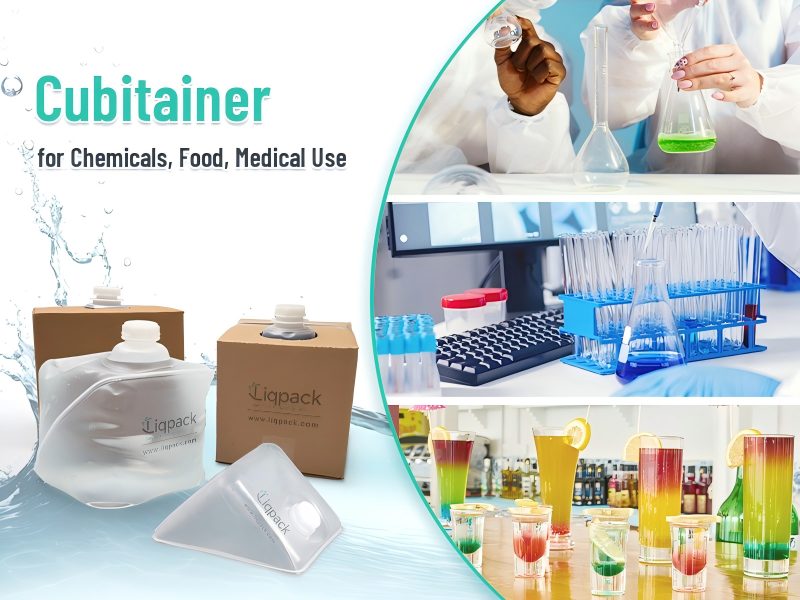
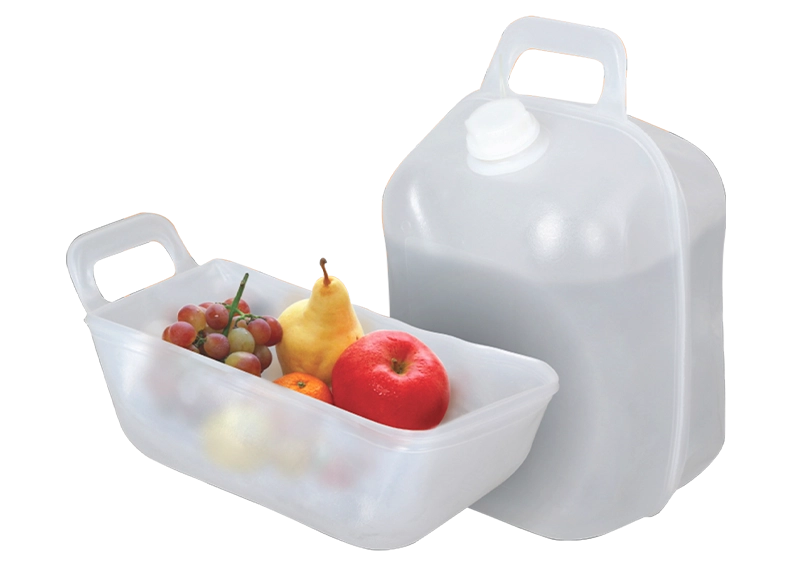
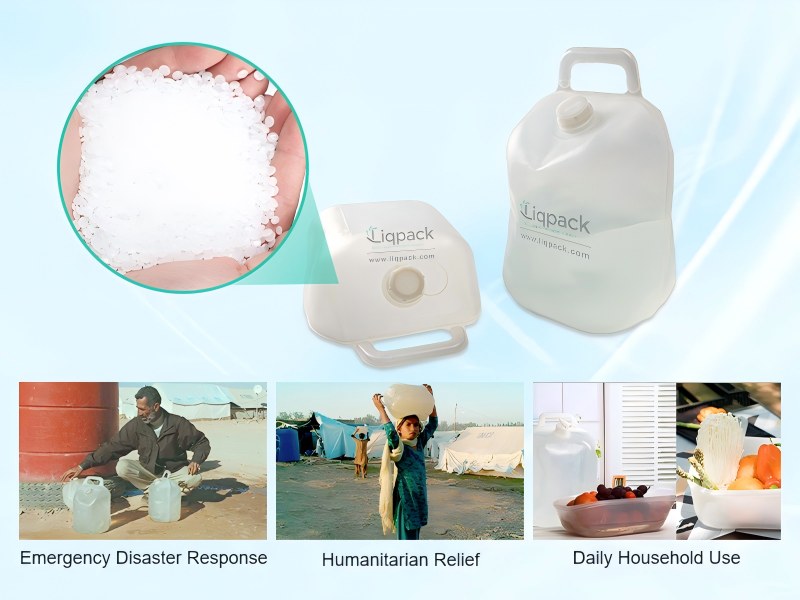
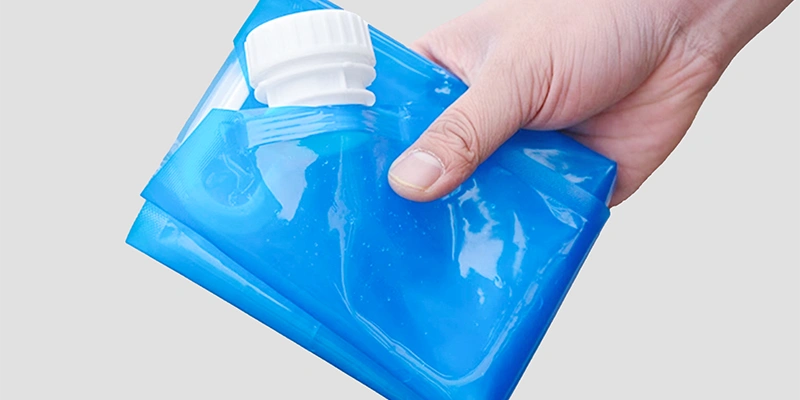
LDPE is a lightweight, flexible thermoplastic widely used in food packaging, water containers, and liners. It’s a common choice for Cubitainers, collapsible jerry cans, and disposable water bags.
- Flexibility: High flexibility; folds easily but can crease.
- Durability: Adequate, but less abrasion-resistant than TPU.
- Safety: Considered food-safe; low risk of leaching compared to PVC.
- Taste and Odor: Generally neutral, but a slight plastic taste is possible.
- Transparency: Typically translucent, not fully clear.
- Weight: Very lightweight, excellent for portability.
Advantages
- Lightweight, portable, and inexpensive.
- Widely recyclable in some regions (#4 plastic stream).
- Neutral safety profile—used in many food packaging applications.
- Suitable for bulk packaging (5L–20L collapsible bags).
Limitations
- Less puncture-resistant than TPU.
- Susceptible to stress cracking over time.
- Heat resistance is limited; it deforms with hot water.
- Not as long-lasting as TPU in repeated-use scenarios.
Best Use Cases
- Emergency water storage kits.
- Collapsible jugs for camping or car trips.
- Disposable or semi-reusable packaging (e.g., beverage Cubitainers).
Side-by-Side Comparison
| Feature | TPU (Thermoplastic Polyurethane) | PVC (Polyvinyl Chloride) | LDPE (Low-Density Polyethylene) |
| Flexibility | Excellent (remains soft in cold) | Good, stiff in cold | Good, folds easily |
| Durability | High abrasion & puncture resistance | Moderate, cracks over time | Adequate, less abrasion-resistant |
| Safety for Drinking | Excellent, low leaching risk | Moderate, plasticizer issues | Good, food-safe |
| Taste/Odor | Minimal plastic taste | Noticeable taste/odor | Slight plastic taste possible |
| Weight | Light, but heavier than LDPE | Heavier than TPU/LDPE | Very lightweight |
| Transparency | Clear | Clear or tinted | Translucent |
| Cost | High | Low | Low–moderate |
| Lifespan | Long-term (years) | Short–medium | Short–medium |
| Recyclability | Limited | Poor | Moderate (#4 recycling) |
| Best For | Outdoor, long-term hydration gear | Budget, short-term storage | Emergency kits, lightweight travel |
Environmental Considerations
- TPU: Difficult to recycle but long-lasting; lower replacement frequency offsets impact.
- PVC: High environmental burden due to chlorine content and additives; incineration produces harmful emissions.
- LDPE: Widely used in packaging; more recycling options available, especially in bulk collection programs.
For brands with sustainability goals, LDPE or TPU generally provides better alignment than PVC.
Choosing the Right Material
The ideal material depends on balancing cost, safety, and durability with your intended use:
- For outdoor enthusiasts: TPU is the clear winner for hydration bladders, collapsible bottles, and rugged use.
- For budget or non-potable uses: PVC remains a viable option, but its safety and environmental downsides limit appeal.
- For emergency kits and lightweight bulk storage: LDPE provides cost-effective, portable, and safe solutions.
When it comes to foldable water bags, one material cannot fit all needs. TPU offers unmatched durability and safety but at a higher price. PVC remains the most economical but carries environmental and health trade-offs. LDPE strikes a balance between cost, safety, and portability, making it a strong choice for everyday and emergency applications.
As consumers and brands alike prioritize safety, sustainability, and performance, TPU and LDPE are steadily overtaking PVC in modern designs. Whether you’re an outdoor adventurer, a humanitarian aid planner, or a brand sourcing bulk hydration solutions, understanding the strengths and weaknesses of TPU, PVC, and LDPE ensures you’ll choose a water bag that performs reliably when it matters most.