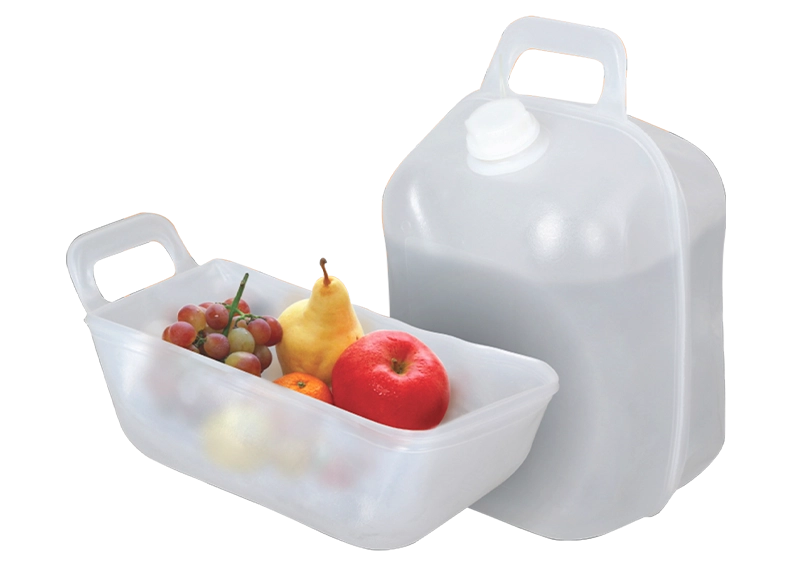
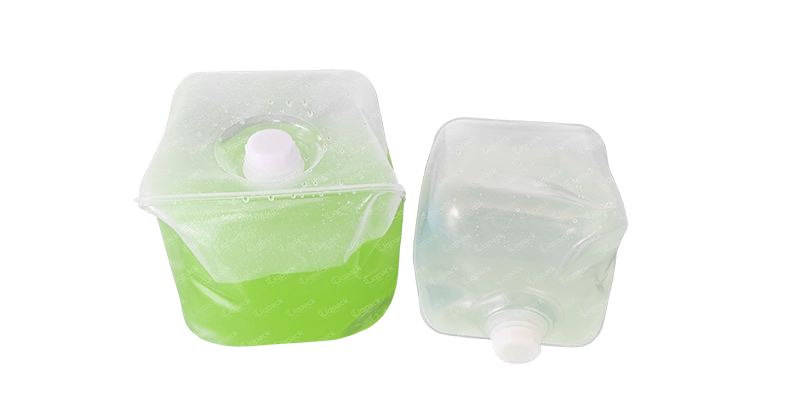
Cubitainers, which are collapsible cube-shaped containers, have become a go-to solution across industries. They are lightweight, flexible, and cost-effective, yet sturdy enough to handle a wide range of liquid and semi-liquid products. Available in different capacities—most commonly 5 liters, 10 liters, and 20 liters—cubitainers allow businesses and individuals to select the right size for specific needs.
This article is a complete guide to understanding cubitainers, comparing the 5L, 10L, and 20L options, and helping you decide which capacity best fits your liquid packaging requirements.
What Is a Cubitainer?
A cubitainer is a semi-rigid, collapsible container made from LDPE (low-density polyethylene). It is cube-shaped when filled, but when empty, it folds or collapses to save storage space. Cubitainers are usually paired with an outer cardboard carton that provides additional protection, stacking capability, and easy labeling.
Key characteristics of cubitainers include:
- Collapsible design: Saves warehouse and shipping space when empty.
- Food-grade safety: Commonly used for edible oils, syrups, and beverages.
- Compatibility with chemicals: Able to withstand a wide range of bases, acids, and cleaning agents.
- Compared to rigid containers, lightweight construction lowers shipping expenses.
- Spout or cap options: Allow controlled dispensing of liquids.
They are extensively utilized in industrial chemicals, domestic cleaning goods, pharmaceutical and laboratory uses, and the food and beverage sectors.
Why Capacity Choice Matters
Selecting the right size of cubitainer is not just about volume. The capacity you choose affects:
- Ease of handling: Larger containers are heavier and harder to pour.
- Cost efficiency: Bigger units reduce packaging per liter but may increase handling costs.
- Storage space: Small containers are easier to store and distribute individually.
- End-user convenience: Customers may prefer manageable sizes for daily use.
This is why the most common capacities—5L, 10L, and 20L—cover a wide spectrum of use cases.
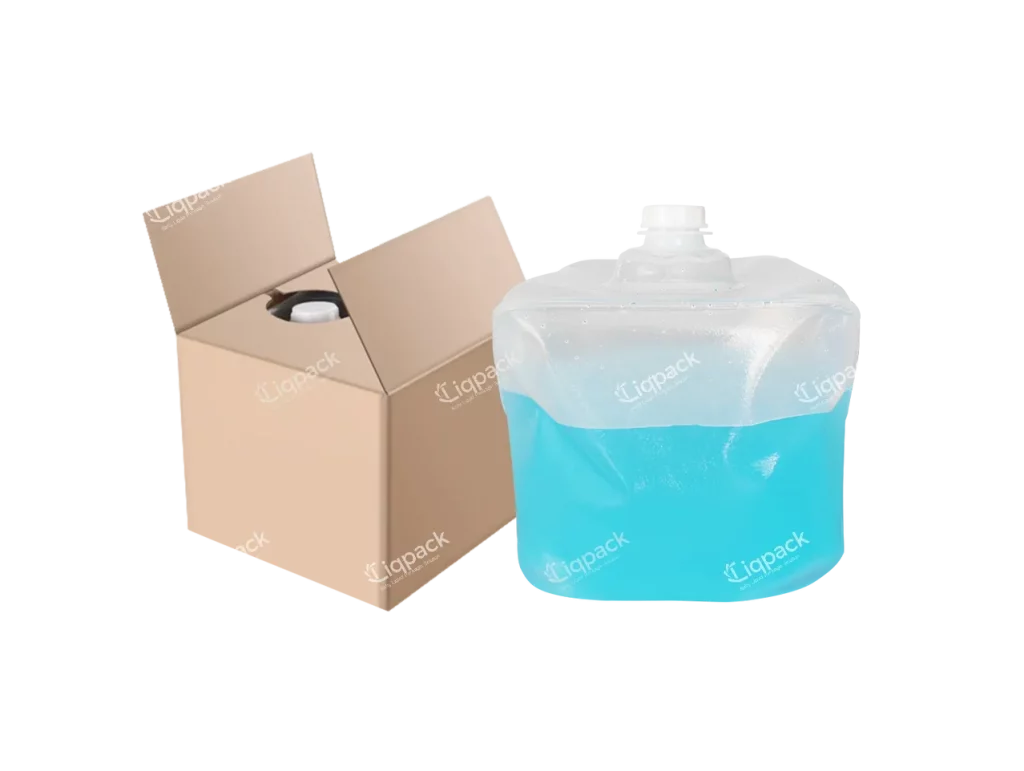
The 5L Cubitainer: Compact and Convenient
The 5L cubitainer is the smallest commonly used size. It is designed for products that need frequent handling, smaller-volume sales, or end-user convenience.
Advantages of 5L Cubitainer
- Lightweight and easy to carry: Ideal for personal or household use.
- Perfect for sampling or smaller batches: Suitable for specialty oils, beverages, and lab chemicals.
- Fits tight storage spaces: Great for retail shelves or small kitchens.
- User-friendly dispensing: Easy to pour or pump without heavy lifting.
Common Applications
- Food ingredients like olive oil, sauces, or syrups.
- Household cleaning liquids.
- Laboratory chemicals in limited volumes.
- Beverage concentrates for restaurants or small cafés.
Best For
Businesses or consumers who need manageable, small-volume packaging that can be carried and used without special equipment.
The 10L Cubitainer: A Versatile Middle Ground
The 10-liter cubitainer offers a balance between compact convenience and high capacity. It is large enough to supply commercial or industrial needs, yet still manageable by hand.
Advantages of 10L Cubitainer
- Balanced size: Easier to handle than 20L, more volume than 5L.
- Cost-effective packaging: Reduces packaging waste per liter compared to 5L.
- Efficient for storage and transport: Still relatively compact for stacking.
- Adaptable for multiple uses: Suitable for both household and commercial applications.
Common Applications
- Beverage syrup and bulk food ingredients for restaurants.
- Detergents and cleaning chemicals for commercial facilities.
- Laboratory or pharmaceutical intermediates in moderate volumes.
- Agricultural chemicals like liquid fertilizers or pesticides.
Best For
Users who want flexibility—not too small, not too heavy. It’s a popular size for small businesses and mid-scale consumers.
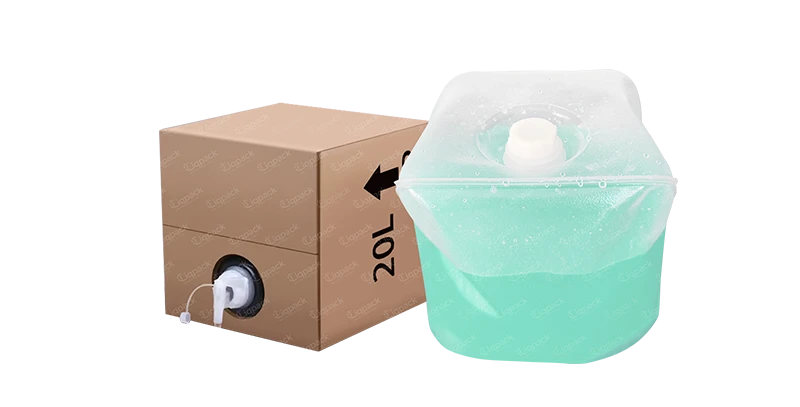
The 20L Cubitainer: Maximum Capacity
The 20-liter cubitainer is the workhorse of the cubitainer family. It is designed for industrial, commercial, and large-scale applications where large volumes need to be transported or dispensed efficiently.
Advantages of 20L Cubitainer
- High-volume packaging: Reduces the number of units needed.
- Cost-efficient per liter: Less packaging waste and lower unit cost.
- Perfect for bulk supply: Ideal for distributors and industrial users.
- Compatible with pumps and dispensers: Designed for controlled bulk dispensing.
Common Applications
- Large-scale food and beverage production (syrups, oils, sauces).
- Industrial chemicals, detergents, and solvents.
- Medical and laboratory water storage.
- Humanitarian aid—bulk potable water or nutritional liquids.
Best For
Companies and organizations that require bulk storage and transport solutions, where space and cost efficiency outweigh portability.
Comparative Table: 5L vs. 10L vs. 20L Cubitainers
| Feature | 5L Cubitainer | 10L Cubitainer | 20L Cubitainer |
| Portability | Excellent | Good | Limited (heavy when full) |
| Volume per Unit | Small | Medium | Large |
| Handling | Easy, one hand | Two hands needed | Requires both hands/pump |
| Best For | Personal/household | Small businesses | Industrial/commercial use |
| Storage Space | Minimal | Moderate | Efficient bulk storage |
| Cost Efficiency | Higher per liter | Balanced | Best per liter |
| Common Use Cases | Food, samples, labs | Restaurants, cleaning, chemicals | Bulk supply, industry, humanitarian aid |
Factors to Consider Before Choosing a Size
When deciding between 5L, 10L, and 20L cubitainers, ask yourself the following:
What Will You Store?
- Food and beverages: All three sizes are suitable; choose based on consumer needs.
- Chemicals and detergents: Larger sizes (10L and 20L) are more cost-effective.
- Medical or lab liquids: Smaller 5L containers reduce handling risks.
Who Will Use It?
- Households or individual users: 5L is easier to manage.
- Restaurants or small businesses: 10L is a versatile choice.
- Industries and distributors: 20L ensures efficiency.
How Will It Be Transported?
- For manual carrying, smaller sizes are best.
- For bulk shipping, 20L cubitainers maximize efficiency.
Storage Condition
- Limited shelf space? 5L or 10L.
- Large warehouses? 20L containers with cartons are more efficient.
Cost and Waste
- Larger cubitainers reduce packaging waste and unit cost.
- Smaller cubitainers are more convenient but less efficient per liter.
Benefits of Using Cubitainers in General
Regardless of size, cubitainers provide a range of benefits compared to rigid bottles or drums:
- Collapsible design: Reduces empty storage volume by up to 80%.
- Environmentally friendly: Less packaging waste and recyclable LDPE material.
- Cost-effective: Lower shipping and packaging costs.
- Safe and hygienic: Smooth surfaces reduce contamination risks.
- Versatile: Suitable for food, chemicals, pharmaceuticals, and more.
Practical Tips for Using Cubitainers
- Always check compatibility: Ensure the material is suitable for your liquid (especially for chemicals).
- Use the right dispensing system: Pumps or taps for 10L and 20L sizes.
- Label clearly: Prevent mix-ups between food-grade and chemical containers.
- Properly store: Store away from direct sunlight in a cool, dry location.
- Reuse when possible: Many cubitainers can be reused if properly cleaned.
Industry Examples
- Food & Beverage: A catering company might use 20L cubitainers for bulk cooking oil, while offering 5L for retail customers.
- Laboratory: A lab may store reagents in 5L cubitainers for safety and handling ease.
- Cleaning Products: Manufacturers often distribute detergents in 10L cubitainers for commercial users.
- Humanitarian Aid: Relief organizations prefer 20L cubitainers for distributing drinking water in disaster zones.
Choosing the Right Size: Quick Recommendations
- For households and individual customers: 5L cubitainer.
- For restaurants, small businesses, and commercial cleaning: 10L cubitainer.
- For industrial, wholesale, and large-scale supply: 20L cubitainer.
Cubitainers are one of the most versatile and efficient liquid packaging solutions available today. They are a great option for a variety of industries, including food and beverage, chemicals, healthcare, and humanitarian aid, due to their lightweight and foldable construction.
The key is selecting the right size:
- The 5L cubitainer is perfect for small-scale, personal, or specialty use.
- For commercial applications as well as small businesses, the 10L cubitainer provides flexibility and balance.
- The 20L cubitainer provides maximum efficiency for bulk supply and industrial-scale operations.
- By carefully considering factors like handling, storage, end-user convenience, and cost efficiency, you can make the best choice for your specific liquid packaging needs.
Ultimately, whether you’re a food manufacturer, a cleaning products supplier, a laboratory manager, or an emergency planner, cubitainers ensure that your liquids are stored and transported safely, efficiently, and cost-effectively.